

Tree safety starts with the right tree in the right place

A little planning today can help your trees grow healthy and strong for years to come. Learn how to choose the right tree, plant safely and avoid future conflicts with power lines and underground utilities.

Planning your plant 

Where you plant a tree is just as important as the tree you select. Planting a tall tree too close to a power line could result in the tree being regularly trimmed shorter than you would ever want or worse, being removed. Pick the right tree and the right place to avoid collisions with power lines, sidewalks, buildings and other trees. 

  1. Get measurements. When selecting a new tree or shrub, ask the tree nursery what the height and width will be once its fully grown.
  2. Call 811. Before digging, call 811 or visit Call811.com to have underground utility lines marked for free. Do this at least 2 business days before you are planning to plant.
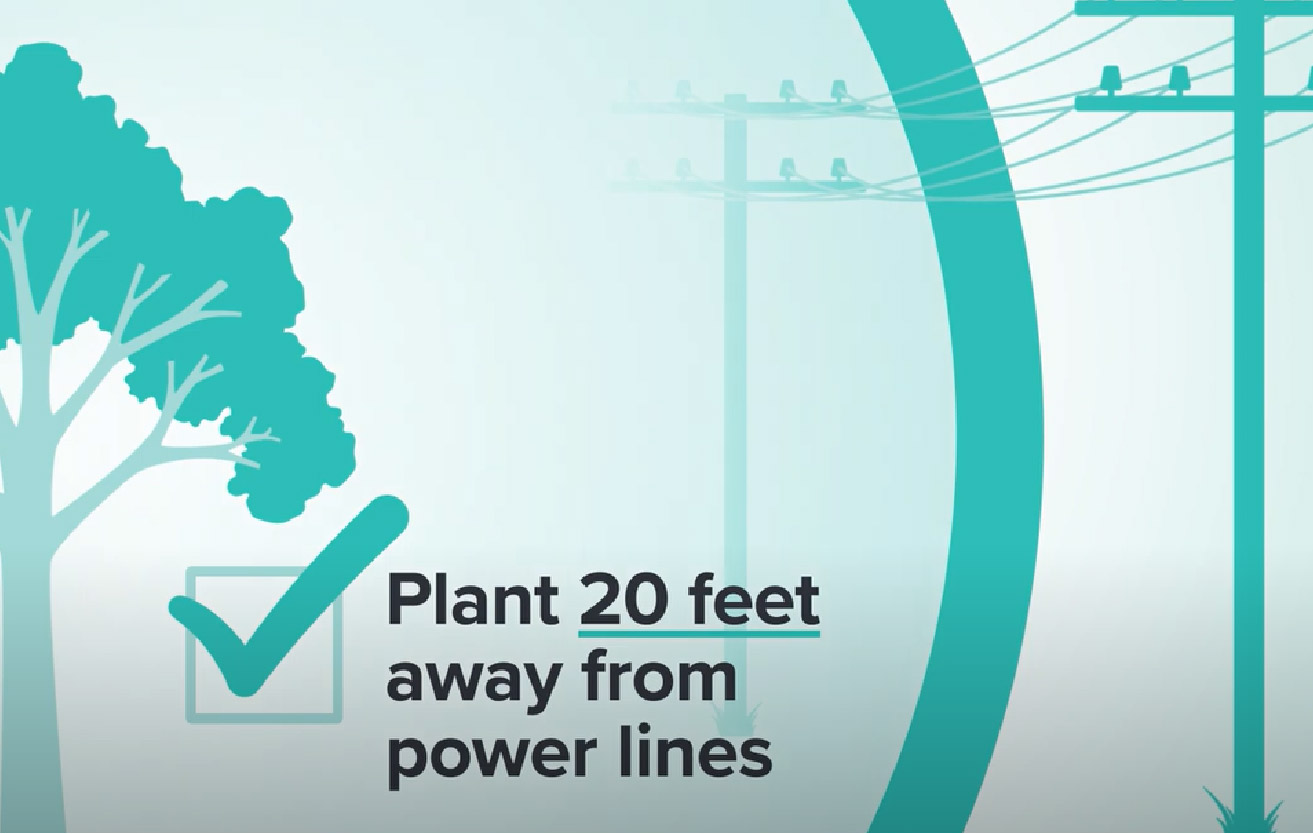
  3. Look up. If power lines are over the area where you want to plant, plan to plant roughly 20 feet away based on the mature size of your tree.
  4. Look down. To be safe, plant to plant at least 25 feet away from the flags that indicate underground natural gas lines.
  5. Look around. If there are any ground-level transformers nearby, plan to plant at least 10 feet away from the front to ensure the transformer is accessible.

Right tree, right place

Graphic showing trees should be planted 20 feet from power lines

Right tree, right place

From selecting the perfect tree at the nursery to calling 811, our expert arborists provide helpful tips so that you plant the right tree in the right place every time.

  • If your tree’s mature height is 20 feet – plant 20 feet away from any nearby power lines.

Planting your tree

Trees typically come in containers or pots, in burlap or are bare root and, depending on the packaging, the roots of the tree will need to be loosened and untangled in case they have been growing in a circle. But you’ll want to wait to do this until you have dug the hole and placed the tree in its spot, careful to carry the tree by the root ball.

  1. Dig the hole. Dig a saucer-shaped hole with sloping sides that is 2x the width of your tree’s container and only as deep as the height of the root ball.
  2. Free your tree. Carefully remove the container or cut the wire basket and remove the rope, twine and burlap.
  3. Set it straight.  Place the tree straight so the trunk flare, located at the base of the tree where the roots spread, is slightly visible above the ground.  
  4. Add some soil. Fill in the hole with previously removed soil, but only until the soil is just below the root collar.
  5. Water the tree. Give the soil around the tree a good soaking to ensure it settles and there are no air pockets.
  6. Add mulch. Keeping a 4-inch distance from the base of the tree, add about 2-4 inches of mulch on top of the backfilled soil. 

Planting trees near gas pipelines

In addition to ensuring your trees will not grow into overhead power lines, you should not plant closer than 25 feet from any natural gas transmission line.

When planting a tree, here's what you need to know.

  • NorthWestern Energy applies a protective coating to steel pipelines and adds a small amount of direct current to mitigate corrosion. Tree roots are attracted to the loosened soil of the pipeline ditch and to the typically constant temperature created by the moving gas. Tree roots can damage the coating and come in contact with the steel. Tree roots carry water and nutrients to the rest of the tree and for that reason are very good conductors of electricity. Risks associated with corrosion leaks and corrosion-related pipeline failures are significantly increased when the pipeline coating is damaged and the tree roots absorb the electric current necessary to stop corrosion.
  • Trees often hide pipeline markers and the corridor that reminds neighbors and contractors of a pipeline in the area. Keeping the pipeline right-of-way clear reduces the risks of third party damage and increases the safety of all.
  • No one wants to lose a tree after many years of growth. Pipelines need maintenance and may even need to be replaced. Trees growing in the pipeline right-of-way could be destroyed when these activities are required.
  • To assure that you are planting your new tree a good distance away from any buried pipes, make sure you Call Before You Dig. One simple call to 811 will get all underground pipelines identified. You should plan to leave any pipeline right-of-way clear.

With proper planning, your tree can thrive for many years while helping maintain the safety and reliability of critical infrastructure.

Call 811 Before You Dig

No project is too small. If it requires a shovel, call 811 or visit call811.com at least two full business days before you begin your project.

Give your new tree the best start

graphic showing to dig a hole twice as big as the tree's container

Give your new tree the best start

Proper planting helps trees thrive while protecting underground utilities. Watch this short video to learn the basics of planting, watering and caring for your new tree.

    Received a tree trimming notice?

    If you've received a notice about tree trimming or removal near power lines, learn why the work is being performed, how customers are notified and what to expect before, during and after vegetation management work.

    Protecting your tree

    Properly maintaining your tree, especially as it relates to pruning, will help keep your tree healthy and structurally sound. Our Vegetation Management Team works year-round trimming trees and other vegetation away from power lines and transformers. Trees that grow into power lines are a major cause of electrical outages and fires. Here are some ways to protect yourself and your tree.

    1. Plant the right tree in the right place, which means away from overhead and underground utility lines.
    2. Never remove a fallen tree or branch from a power line. You could be seriously injured or killed.
    3. If a tree or branch touches a power line, keep yourself and others away from the tree and call 911.

    Maintaining your trees near power lines

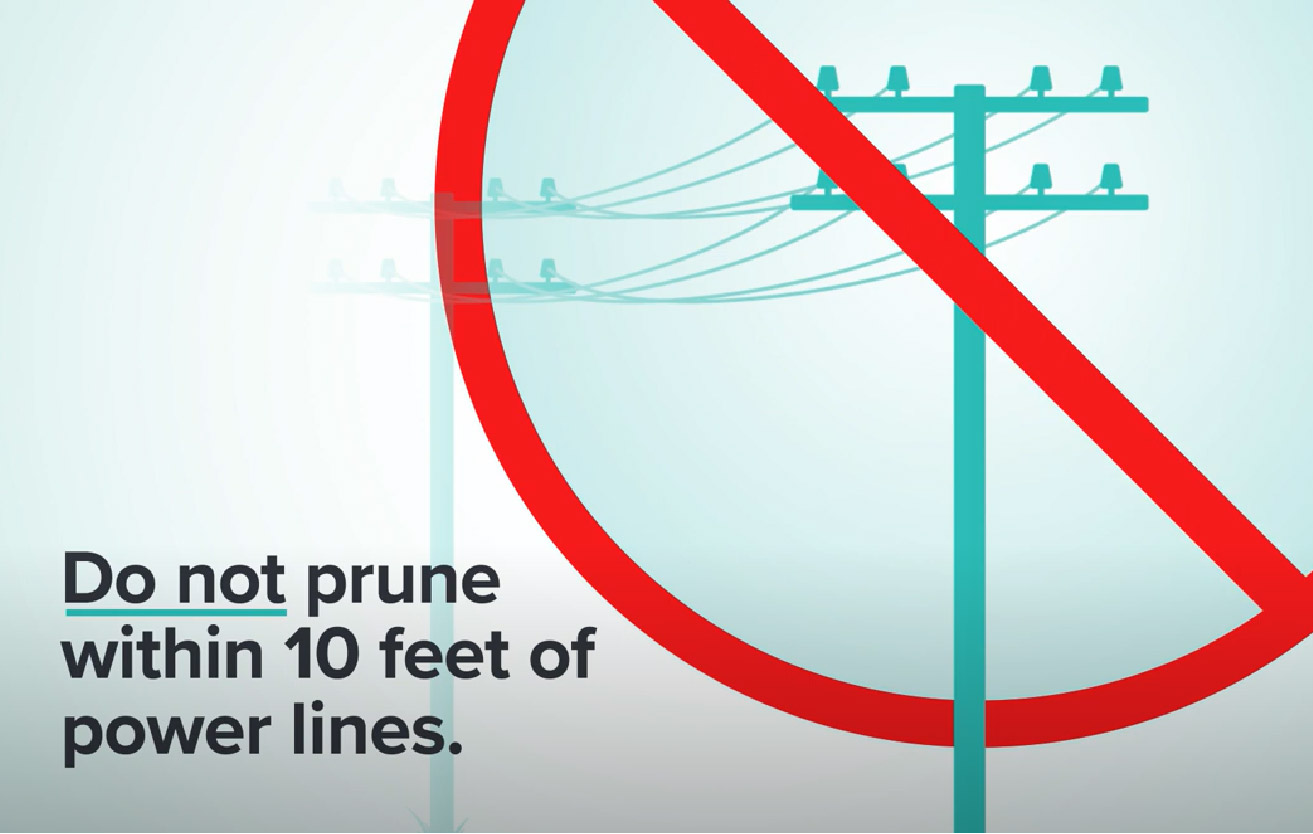
    Graphic showing not to prune within 10 feet of powerlines.

    Maintaining your trees near power lines

    Trees that grow too close to power lines can cause outages and fires. Watch the important work being done by our crews to keep our service reliable and safe.

    Keeping trees away from power lines

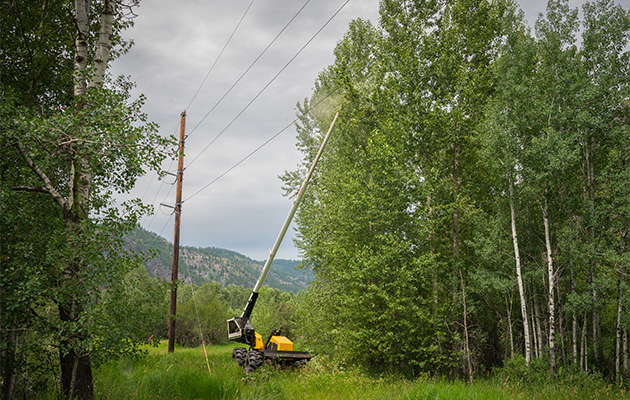
    Vegetation management crew equipment clearing trees near power lines in a forested area.

    Keeping trees away from power lines

    When trees or branches grow too close to power lines, or when roots interfere with underground utility lines, they can cause outages, damage infrastructure, create safety hazards and increase increase wildfire risk. By managing vegetation around utility equipment, we help protect our customers, our communities and the environment.

    • We inspect nearly 25,000 miles of overhead power lines annually.
    • Trees that are too close to power lines may be pruned or removed to help prevent outages and reduce wildfire risk.
    • Vegetation management helps us provide safe, reliable service while protecting our customers and communities.

    Need information about tree trimming?

    Find answers to common questions about why trees are trimmed, how trees are selected, what notifications look like and what to expect before and after tree work.